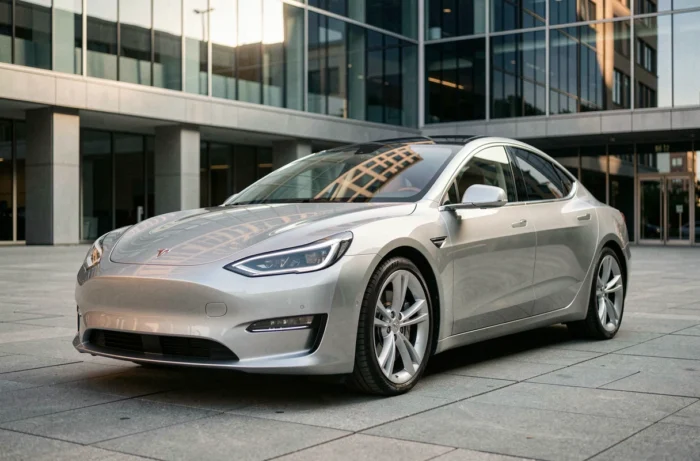
In September 2026, electric vehicles accounted for 42% of new registrations in France, closely following hybrids at 43%. This shift in the hierarchy of powertrains redistributes the cards for manufacturers, distribution networks, and corporate fleets. The French automotive market is entering a phase where technical decisions take precedence over announcements.
Corporate fleet standards and European regulation: what changes concretely
The most structuring regulatory axis in 2026 does not concern individuals. The European Commission is gradually shifting its requirements towards corporate fleets and company cars, with average emissions thresholds becoming stricter.
The ICCT notes that several European countries are already reaching the necessary levels to meet these objectives. France is among the markets where the electrification dynamic of fleets is progressing, driven by a tax framework that penalizes thermal powertrains more heavily in salary allowances.
For fleet managers, the question is no longer whether to switch to electric, but how to manage the coexistence of residual thermal vehicles and zero-emission models under the same fleet management contract. TCO (Total Cost of Ownership) tracking tools must now incorporate the volatile residual value of used electric vehicles, a parameter that few long-term rental companies model correctly.
We observe that this regulatory pressure on fleets mechanically accelerates the supply of electric vehicles in the used market, which ties into another major topic of 2026.
Used electric vehicle market in France: a lever for accessibility
Public support is shifting from new vehicles to the accessibility of the existing fleet. According to AAA Data, used electric vehicles are becoming a regulatory priority in France, with measures aimed at making these models accessible to households excluded from the new vehicle market.
Following the news on Annuaire Voitures allows one to gauge the speed at which this segment is structuring, between extended manufacturer warranties and battery certification.
The real technical challenge lies in the transparency of battery health status (SOH, State of Health). A used electric vehicle with a battery showing a SOH below 80% loses a significant portion of its value, but this data remains difficult for individual buyers to obtain. Manufacturers that offer a reliable battery passport will gain a decisive commercial advantage in this segment.

Registrations September 2026: technical reading of French figures
The data from AAA Data and Caradisiac confirm a shift that we have anticipated for several quarters. Electric and hybrid vehicles now capture more than four out of five registrations in France, with non-hybrid gasoline and diesel continuing to decline sharply over the first nine months of the year.
This ratio masks disparities by segment. In the city car segment, the affordable electric offering (Citroën ë-C3, Renault 5 E-Tech, Dacia Spring) drives volumes. In the compact SUV segment, plug-in hybrids retain a significant share, supported by models whose WLTP range in electric mode now far exceeds the useful threshold for a home-to-work commute.
Three indicators deserve particular attention in the coming months:
- The penetration rate of electric vehicles compared to hybrids in the B segment (city cars), which could mark the definitive tipping point before the end of 2026
- The evolution of the powertrain mix at Stellantis, whose electric transition remains slower than its Asian competitors in the French market
- The weight of Chinese brands (BYD, MG, Xpeng) in electric registrations, which is no longer solely about price but also about embedded technology
Chinese competition in the European automotive market: beyond price
Reducing the offensive of Chinese manufacturers to a price war would be a misanalysis. The competition now revolves around software architecture and iteration speed. BYD, Xpeng, and brands from the Geely group are deploying OTA (Over-The-Air) updates at a pace that European manufacturers struggle to keep up with.
The ICCT also highlights significant national disparities in the penetration of Chinese brands in Europe. France, with its ecological bonus conditioned on a production environmental score, has slowed down certain models assembled in China. In contrast, other European markets remain more permeable.
On the industrial front, the European response is being organized. Bruegel (European think tank) recommends an industrial adjustment plan rather than a protectionist policy. This approach assumes massive investments in battery gigafactories and training the automotive workforce in software skills.
European disparities: an electric market at multiple speeds
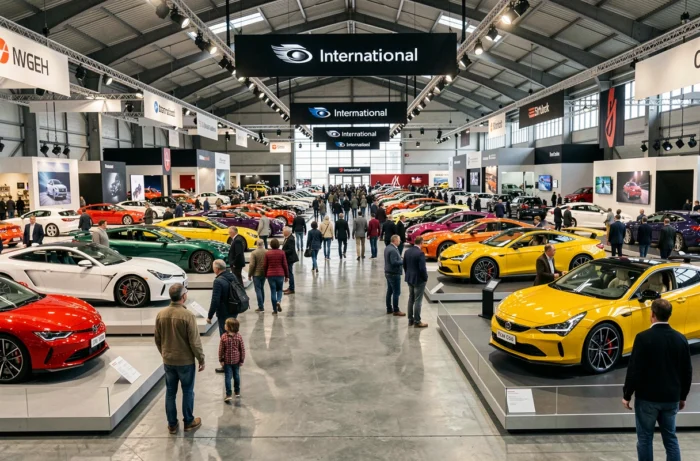
The ICCT report from August 2026 confirms that the European market is accelerating towards electric but in a very uneven manner. Nordic countries maintain a structural lead, while Southern and Eastern Europe progress more slowly, hindered by an insufficient charging station network and lower purchasing power.
This heterogeneity poses a concrete problem for manufacturers who must calibrate their offerings by country. An electric model positioned as entry-level in France may remain inaccessible in Romania or Greece. The multi-powertrain strategy (thermal, hybrid, electric) that some analysts considered transitional could therefore last longer than expected in certain markets.
For the French automotive industry, the challenge crystallizes around the ability to locally produce competitive electric vehicles. Stellantis, whose several factories in France are operating below capacity, will need to accelerate the allocation of high-demand electric models to its French lines to justify maintaining industrial employment.
The last quarter of 2026 promises to be decisive. Manufacturers that have secured their supply of battery cells and controlled their software costs will gain a lasting advantage in a deeply reshaping automotive market.