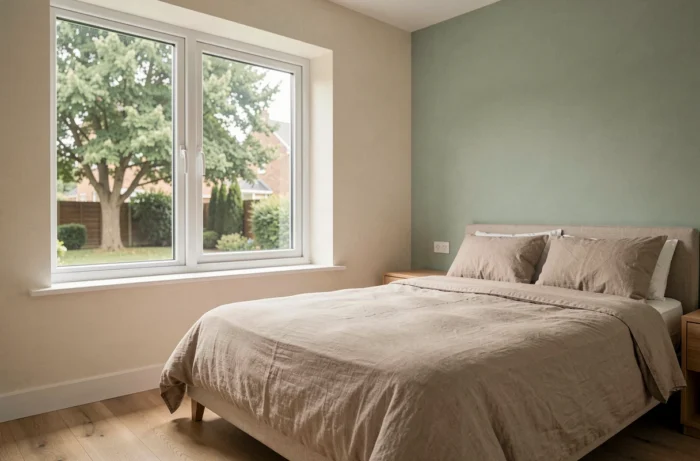
The comfort of a room largely depends on the window that equips it. Thermal insulation, acoustic attenuation, air renewal, management of natural light: each parameter is measured, compared, and guides the choice of glazing, material, and type of opening. This article reviews the data that help decide between the options available on the market.
Uw coefficient, Rw attenuation, and air permeability: the data to compare
Every window sold in the European Union must be accompanied by a performance declaration related to the CE marking. This document indicates the thermal coefficient Uw (in W/m².K), the acoustic attenuation Rw (in dB), air permeability, water tightness, and wind resistance.
For a room, two indicators weigh more than others. The Uw conditions the retention of heat in winter and coolness in summer. The Rw determines the window’s ability to filter outside noise, a direct criterion for sleep quality.
| Criterion | What it measures | Reference for a room |
|---|---|---|
| Uw (W/m².K) | Thermal loss of the complete window | The lower the value, the better the insulation |
| Rw (dB) | Acoustic attenuation | Prefer a high value in noisy areas |
| Air permeability | Air leaks through the joinery | Highest possible class to limit drafts |
| Water tightness | Resistance to water penetration under pressure | Variable depending on exposure to prevailing winds |
The NF certification and Acotherm certification provide additional checks on thermal and acoustic performance and manufacturing quality. Checking these labels before purchase avoids relying solely on commercial arguments.
To explore the different types of windows for a room, cross-referencing these indicators with the material and type of opening remains the most reliable method.
PVC, aluminum, or wood: performance gaps for a room
The choice of material is not just an aesthetic question. Each joinery profile modifies the overall Uw, durability, and maintenance required.
PVC: the most favorable insulation/price ratio
PVC is the most common material on the joinery market. It offers good thermal and acoustic performance, almost no maintenance (a wash with water is enough), and a significantly lower cost than aluminum. Its color range has expanded, and current profiles are reinforced to better resist heat-related deformations.
However, PVC profiles remain thicker than aluminum ones, which slightly reduces the glazed area and thus the amount of natural light in the room.
Aluminum: maximum brightness, thermal bridge to watch
Aluminum allows for thin profiles, which increases the glazed area and the amount of light entering the room. This is a direct advantage for a north-facing room or one with a modest-sized opening.
The historical weak point of aluminum is its thermal conductivity. Recent joineries incorporate thermal bridge breaks that correct this flaw, but the cost of an aluminum window with thermal break is significantly higher than that of PVC.
Wood: natural insulation, regular maintenance
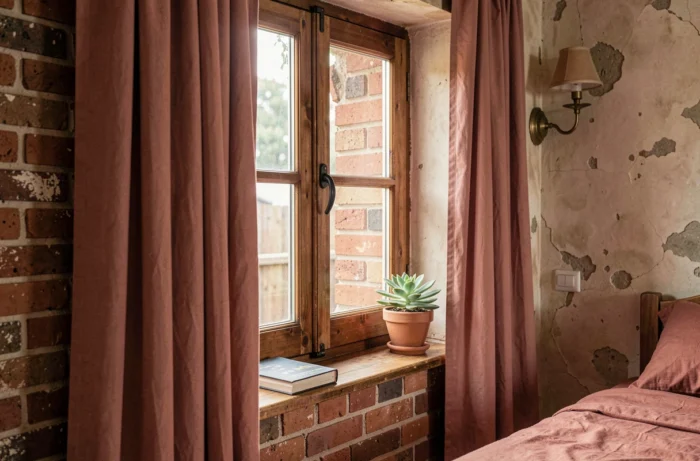
Wood is a natural insulator that offers excellent thermal and acoustic performance. It adapts to custom windows and adds a special charm to both old and new house rooms.
Treatments against moisture, insects, and fire are regularly recommended to maintain its properties. This maintenance cycle represents a cost and effort to consider over the lifespan of the joinery.
Type of opening suitable for a room: casement, tilt-and-turn, or sliding
The type of opening influences nighttime ventilation, security, and space in the room.
- Casement window (or French window): fully opens inward, maximum ventilation in summer, but the swing encroaches on the room space. To be preferred when the floor area allows.
- Tilt-and-turn window: slightly ajar from the top, ensuring continuous ventilation without fully opening the sash. This mode reduces the risk of intrusion and limits direct drafts on the bed, an asset for the night.
- Sliding bay or sliding window: no interior swing, ideal solution for small rooms or access to a balcony. However, air tightness is often lower than that of a casement window.
For a room, the tilt-and-turn combines secure nighttime ventilation and good airtightness when closed. It is the type of opening that meets the most configurations.
Ventilation and window replacement: a common trap in renovations
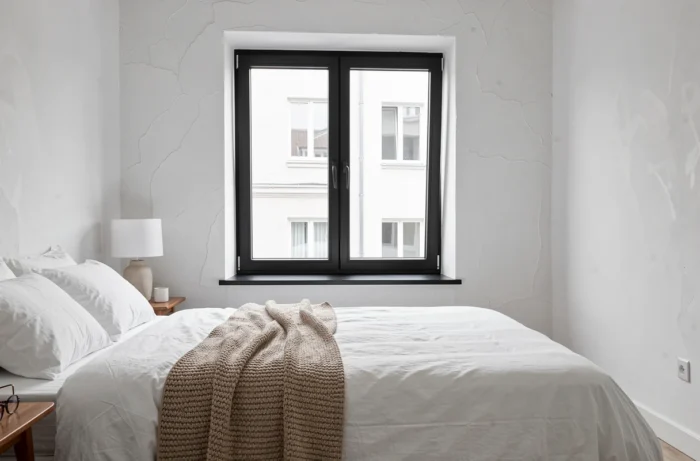
Replacing an old window with a more airtight model improves insulation but can degrade ventilation if the housing is not diagnosed beforehand. In a room, humidity and CO₂ accumulate overnight. Without sufficient air renewal, indoor air quality deteriorates and condensation problems appear on walls and around the frame.
Recent developments in MaPrimeRénov’ go in this direction: improving air tightness must be considered alongside air renewal, especially during comprehensive renovations. Since September 1, 2026, the replacement of windows done in isolation is no longer eligible for MaPrimeRénov’ as a gesture. It can still be integrated into a large-scale renovation, while CEE, eco-PTZ, and reduced VAT remain distinct options depending on applicable conditions.
Before choosing a window model for a room, checking the state of the existing ventilation (single-flow VMC, air inlets on the joinery) helps avoid an investment that solves a thermal problem while creating a health issue. The choice of glazing, material, and opening only makes sense in a home where air circulates properly.