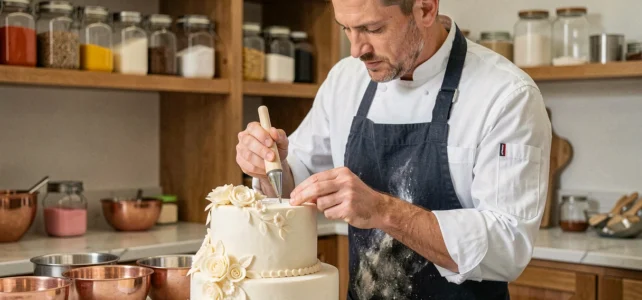
French pastry is going through a period of redefinition. The regulatory framework is evolving, consumer expectations are shifting towards naturalness and traceability, and creative pastry chefs find themselves navigating between a demanding technical heritage and trends that disrupt the norms. This context prompts an examination of what truly distinguishes a creative approach from a mere fad.
APE Code 10.71J: What the new classification changes for artisanal pastry
The APE code 10.71J, titled “Manufacture of fresh pastry associated with its retail sale”, replaces the old code 10.71D for artisanal pastries. The distinction may seem technical, but it has a direct consequence on the positioning of artisans.
This new code officially recognizes the specificity of traditional fresh pastry compared to industrial preservation productions, classified under code 10.72Z. For a creative pastry chef, this clear separation offers a communication lever: claiming an artisanal grounding becomes a regulated approach, not just a marketing argument.
The open question remains that of practical application. Field feedback varies on this point: some artisans see it as a long-awaited recognition, while others view it as an additional formality with no impact on their daily activities. Workshops like those presented on monsieursimon.fr illustrate this tension between artisanal demand and the desire to renew formats.
Natural leaven and long fermentation in pastry: the 2026 trend
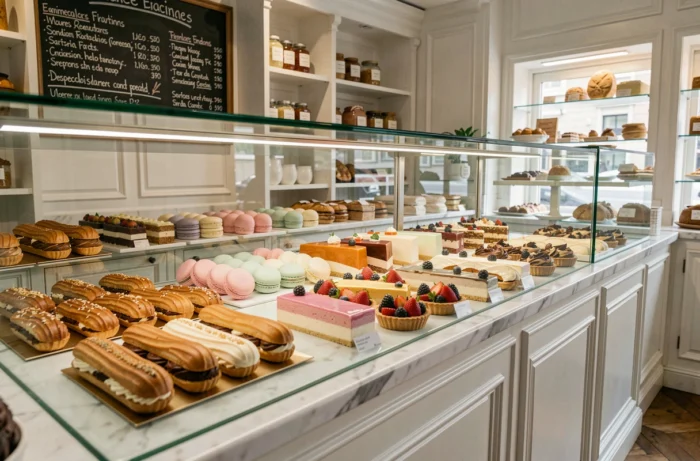
Natural leaven is no longer reserved for bakers. The 2026 trends in bakery-pastry show a marked revaluation of leaven as a fundamental pillar of artisanal products. Consumers seek authenticity, digestibility, and taste quality, three promises that long fermentation fulfills better than instant yeasts.
This evolution directly affects the foundations of creative pastry. Brioche, viennoiseries, leavened doughs: long fermentation alters textures and creates distinct aromatic signatures. A pastry chef who incorporates leaven into their creations is not just making a technical choice. They are building a bridge between baking tradition and contemporary creation.
What fermentation changes on the plate
Prolonged fermentations develop complex aromas that rapid processes cannot reproduce. The slightly tangy notes of natural leaven open up unprecedented pairings with certain fruits or origin chocolates.
- Leavened doughs offer a more aerated crumb and a longer natural shelf life, without additives
- Slowly fermented viennoiseries present a different flaky structure, with more irregular but tastier layers
- Leaven brioche allows for a reduction in added sugar while maintaining a perception of sweetness thanks to fermentation aromas
The proportion of French artisanal laboratories that have adopted these techniques remains difficult to quantify. The direction, however, is clear: naturalness is becoming a differentiating criterion for creative pastry chefs.
Citrus, acidity, and plant-based pastry: markers of modernity
Citrus fruits and tangy flavors (yuzu, lemon, exotic fruits) are establishing themselves as markers of modernity in pastry. This shift towards acidity is not trivial. It reflects a shift in palates, a weariness with exclusively sweet desserts, and a growing influence of Asian cuisines on French pastry.
Plant-based pastry is also gaining ground. Not as a militant niche, but as a technical experimentation ground that drives innovation. Replacing butter, eggs, or cream in an entremet without sacrificing texture or taste represents a challenge that only pastry chefs with a solid technical background can meet.
Acidity as a compositional tool
A creative pastry chef uses acidity as a musician uses dynamic contrasts. An insert of yuzu in a black sesame biscuit does not aim for decorative exoticism. It creates a gustatory tension that rekindles interest with each bite.
This approach requires a fine understanding of balances. Too much acidity overwhelms the dessert. Not enough, and the modern effect disappears. The dosage of acidity often distinguishes the technical pastry chef from the creative pastry chef.
Traceability and environmental claims: the tightening framework
The European directive 2024/825, applicable from September 27, 2026, strictly regulates environmental claims. For a pastry chef who communicates about their commitments (short circuit, organic, local), the consequences are direct: every mention must be justifiable and verifiable.
- Terms like “natural,” “artisanal,” or “traditional” used without verifiable basis expose one to sanctions
- The display of origin France and European Union extends to new categories of ingredients, complicating supply management
- Life cycle assessments (LCA) in the agri-food sector are progressing and could eventually concern artisans claiming a reduced environmental impact
This regulatory tightening places creative pastry chefs at a crossroads. They must either invest in documenting their practices or abandon environmental arguments in their communication. Transparency becomes an operational constraint, not just a discourse.
French creative pastry finds itself at a crossroads where craftsmanship alone is no longer enough. The regulatory framework, expectations for naturalness, and new taste palettes are reshaping the contours of the profession. The artisans who will stand out will be those who document their practices with the same rigor they measure their recipes.