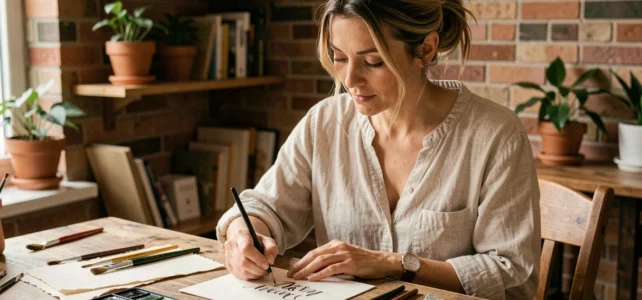
Creative hobbies encompass any manual or artistic activity practiced outside a professional setting, with the intention of personal production. Knitting, ceramics, embroidery, journaling, mosaic: the spectrum is wide. The recent trend does not push towards a single hobby, but rather towards a fragmentation of practices into very specific micro-universes, from DIY jewelry to homemade mini-magazines.
Choosing a creative hobby suited to your profile rather than the trend
Most guides list activities and leave the reader to figure it out. The real starting point is elsewhere: a creative hobby works when it meets a specific personal need. Recent research in positive psychology shows that daily creativity enhances emotional well-being, especially when it satisfies needs for autonomy and competence, rather than when the produced result is “beautiful” according to external criteria.
In other words, a person looking to unwind after a sedentary workday does not have the same needs as a parent wanting to share an activity with their children. Among the hobbies offered by Graines de Blogueuses, this diversity of approaches is clearly visible: some practices require fine concentration, while others value the repetitive and meditative gesture.
Three criteria allow for effective filtering:
- The level of concentration required: counted cross-stitch embroidery demands sustained attention, while simple row crochet can be done in front of a movie without difficulty.
- The space and materials available: ceramics require a kiln or access to a workshop, while journaling fits in a handbag.
- The relationship to the result: some people need a finished and useful object (sewing, jewelry), while others find pleasure in the process itself (free watercolor, collage).
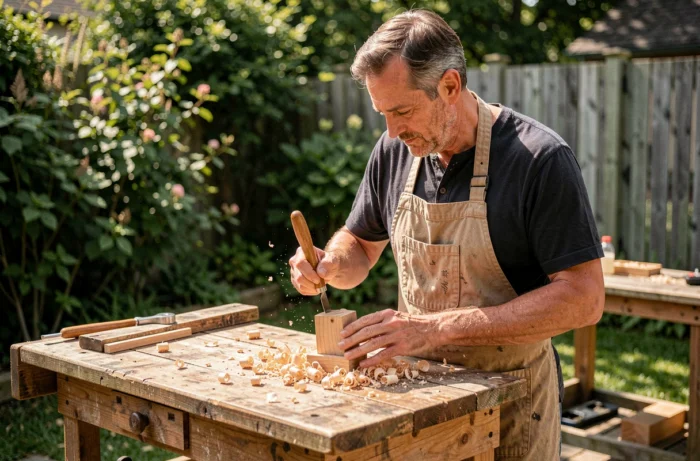
Granny crafts and digital disconnection: why young adults are knitting
Knitting, embroidery, sewing, and crochet are experiencing a marked resurgence among young adults. This phenomenon has a name in the Anglo-Saxon press: granny crafts. The main driver is not nostalgia, but a desire to disconnect from screens.
After several hours spent daily on digital interfaces, manual work offers a clear sensory break. Hands are occupied, the gaze focuses on a fixed point, and the pace slows down. This anti-digital overload dimension explains why these activities attract an audience that, ten years ago, would not have considered them.
Needlepoint and punch needle illustrate this evolution well. These techniques allow for the production of decorative pieces with modest technical learning. The repetitive gesture of punch needle generates a calming effect comparable to active meditation. The basic materials remain accessible, and many ready-to-use kits allow for starting without prior research.
Creative micro-universes in 2026: journaling, mosaic, and DIY jewelry
Creative trends are shifting towards very targeted niches. The Pinterest report “Find Your Joy” identifies themes like Kitchen Witch, Home Café Engineering, Backyard Botanist, or Curated Clutter. These labels reflect a reality: practitioners are no longer looking for “a creative hobby” but a complete aesthetic universe.
Creative journaling now goes beyond the simple notebook. Enthusiasts combine calligraphy, collage, miniature watercolor, and scrapbooking in thematic notebooks. Some produce photocopied mini-magazines (zines) distributed among their circle, a practice inherited from the punk culture of the 1980s that is reviving in artisanal form.
DIY jewelry and charms: a low-cost creative hobby
The making of handmade jewelry, particularly polymer clay charms and beaded bracelets, is seeing a marked increase. The appeal lies in several factors: the materials are inexpensive, the results are immediately wearable, and sharing on social media amplifies motivation.
Mosaic, long confined to adult art workshops, is also becoming more accessible thanks to suitable kits. Smaller formats (coasters, photo frames) allow for completing a project in a single session, which suits those who abandon long projects.
Creative hobbies and mental health: beyond simple relaxation
The link between artistic practices and mental health goes beyond superficial well-being. This topic is emerging as a public health issue. Regular creativity affects mood, stress management, and feelings of personal competence.
The mechanism is twofold. On one hand, manual activity engages distinct neural circuits from those activated by intellectual work or passive screen consumption. On the other hand, visible progress (a row of knitting, a line of embroidery, a finished piece of jewelry) provides concrete feedback that many tertiary professions no longer offer.
Creative activity in a group or solo: two different logics
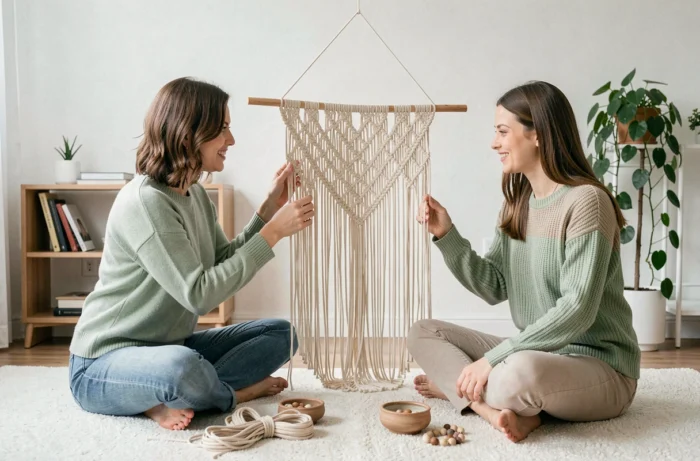
In-person creative workshops are multiplying. Ceramics, modern embroidery, bookbinding: the offerings are expanding in medium-sized cities. The social dimension of these workshops constitutes a distinct benefit from solitary practice.
Alone, creative hobbies function as a bubble of voluntary concentration. In a group, they add a structured social connection around a shared activity rather than a conversation. The two formats do not meet the same need and can coexist in the same routine.
What materials to start a creative hobby without breaking the bank
A common mistake is to invest in expensive materials before knowing if the practice is truly enjoyable. Starter kits offer a pragmatic alternative for most disciplines.
- Embroidery and punch needle: a complete kit (canvas, needle, threads, hoop) costs less than a meal at a restaurant. The format allows for testing without commitment.
- Creative journaling: a notebook with thick pages, a few markers, and a glue stick are sufficient. The purchase of additional supplies comes naturally if the practice becomes established.
- Ceramics without a kiln: air-drying clays allow for modeling at home. The result is less durable than fired ceramics, but the modeling experience remains the same.
- DIY jewelry: a pack of beads, elastic thread, and a pliers are enough for several creations.
The choice of the first creative hobby should remain modest in investment. A low-cost kit tests real interest without creating guilt if the activity does not suit. The only variable that truly matters, in the end, is consistency: half an hour per week produces more effects than an isolated intensive workshop.