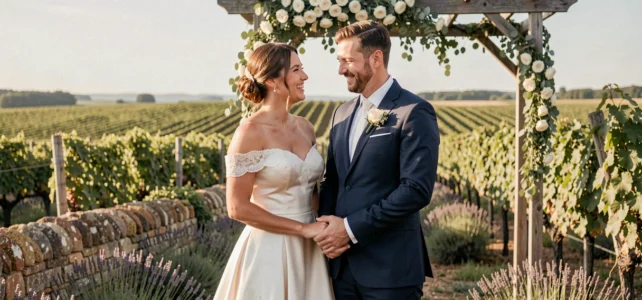
The wedding as it is prepared today is no longer like it was ten years ago. Celebrations tend to be shorter, more personalized formats, often divided into several distinct parts. The dream wedding is no longer a fixed formula: it is built around concrete, sometimes contradictory choices that deserve to be made before any booking.
Eco-friendly wedding: a criterion that restructures organization
The eco-friendly approach in weddings goes beyond mere symbolic gestures. According to The Celebrant Directory (August 2026), current trends are leaning towards local and seasonal flowers, reusable decorations, and a waste reduction logic integrated from the event’s design stage.
This shift changes how providers are chosen. A florist who works in a short supply chain does not offer the same catalog as an international wholesaler. Timelines change, and availability does too. It is no longer about adding a green touch to a classic wedding, but about rethinking the decision-making chain.
Second-hand options are gaining ground for wedding dresses and decorations. Specialized platforms allow couples to find already worn pieces or reused scenography elements. For couples exploring these avenues, resources like https://mariage2reve.ch/ gather inspirations suited to these new approaches.
Field feedback diverges on one point: the real cost of an eco-friendly wedding. Some providers charge a premium for sustainable materials, while others offer equivalent rates thanks to reduced volumes. The available data does not allow for a clear conclusion on a uniform price trend.
Reception venue and format: the choice that conditions everything else
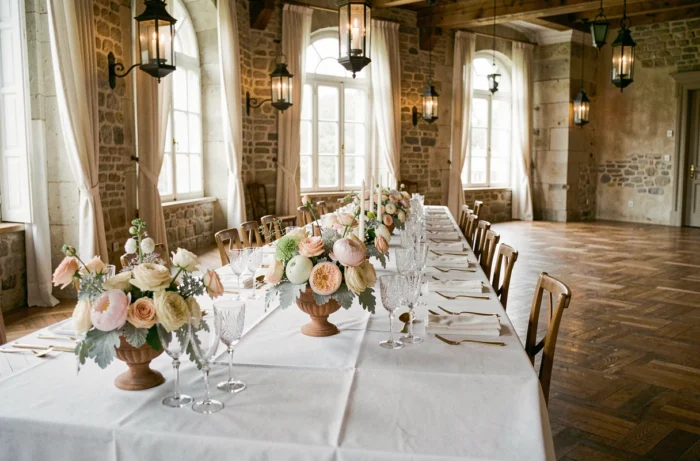
The majority of competitors treat the venue as just one step among others. In reality, the reception venue determines the budget, the number of guests, and the style of the day. A vineyard does not impose the same constraints as a municipal hall or a privatized restaurant.
The trend towards intimate celebrations redefines what “reception venue” means. A couple with thirty guests does not need a castle. Flexible spaces (renovated barns, private gardens, restaurants with terraces) allow for a more free scenography, often at a lower cost.
Reception in multiple parts: a growing format
Breaking the day into distinct sequences (civil ceremony in the morning, limited lunch, expanded evening) becomes a structuring choice. This format allows each moment to be adapted to a different group of guests.
However, multiplying locations or time slots complicates logistics. Transportation between two sites, coordination of providers, and schedule management add a layer of organization that many couples underestimate.
- A single venue with multiple spaces (indoor and outdoor) simplifies coordination and reduces transportation costs for guests.
- A two-part format (intimate ceremony followed by an open evening) allows for better control of the catering budget for the meal portion.
- Privatizing a restaurant often remains cheaper than a reception hall with an external caterer, for the same number of guests.
Wedding budget: the areas where couples misallocate
The question of budget comes up in all guides, but rarely from the perspective of actual trade-offs. The caterer and the venue alone absorb the largest share of the budget. The rest (photographer, decoration, attire, entertainment) shares a balance that is often tighter than expected.
A common pitfall: setting a global budget without breaking it down by category. A couple that books an expensive venue before calculating the caterer’s costs finds themselves constrained in all other areas.
Dinner as an experience, not just a meal
Recent analyses (The Myst Dong Khoi Hotel, August 2026) indicate a rise in interest for interactive culinary stations and unconventional meal formats. The classic seated dinner is losing ground to options that integrate the meal into the overall experience of the evening.
This choice has a direct impact on the budget. A buffet at stations can sometimes cost less than table service but requires more staff on-site. Therefore, quotes must include the complete cost (food, service, equipment, setup) for the comparison to be relevant.
Civil ceremony and personalization: framework and limits
The civil ceremony has established itself as a central moment for couples who want a wedding that reflects their image. It allows for the choice of venue, tone, speakers, and duration without institutional constraints.
Several points deserve to be clearly stated:
- A civil ceremony has no legal value in France or Belgium. A visit to the town hall remains mandatory for the union to be recognized.
- Hiring a professional officiant (sometimes called a “celebrant”) incurs an additional budget often absent from initial estimates.
- Writing personal vows takes time. Couples who leave it late produce generic texts that lose the desired effect.
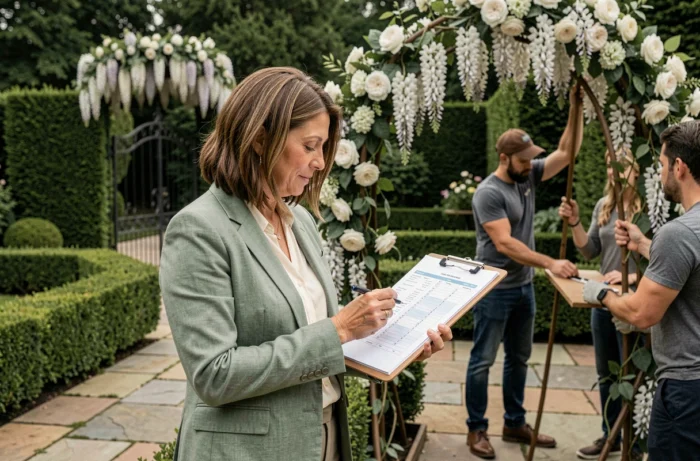
Personalization has its practical limits. A wedding where every detail is custom-made requires significantly longer preparation time. For couples who work full-time, delegating coordination to a wedding planner remains the most effective lever to meet deadlines without sacrificing quality.
The wedding market is evolving towards formats where experience takes precedence over appearance. Choices of venue, budget, and ceremony are now made based on what the couple wants to experience, not what they want to show. This distinction, seemingly simple, changes the hierarchy of decisions from the very first weeks of preparation.